

World Heart Day 2026: Don't Miss a Beat. Know the Signs of Heart Disease
Heart disease is the leading cause of death in the world, and in India it often strikes at a younger age. The good news is that many heart problems can be prevented, and many heart attacks can be survived when the warning signs are recognised early.
World Heart Day is observed every year on 29 September. This year's message is simple: learn the symptoms, do not ignore them, and take small daily steps to protect your heart.
What is Heart Disease?
Heart disease, or cardiovascular disease, is a group of conditions affecting the heart and blood vessels. The most common is coronary artery disease, where fatty deposits (plaque) narrow the arteries that supply blood to the heart. When an artery is blocked, the result is a heart attack. Other types include heart failure, irregular heartbeat (arrhythmia), valve problems and heart conditions present from birth.
Heart Attack Symptoms You Should Never Ignore
- Chest pain, pressure, tightness or burning that lasts more than a few minutes or keeps returning
- Pain or discomfort spreading to the left arm, shoulder, neck, jaw or back
- Shortness of breath, with or without chest discomfort
- Cold sweat, dizziness or light-headedness
- Nausea, vomiting or indigestion-like discomfort
- Unusual tiredness or weakness
Heart Attack Symptoms in Women
Women may not have the classic crushing chest pain. They are more likely to feel unusual fatigue, breathlessness, nausea, back or jaw pain, or upper stomach discomfort. These symptoms are often mistaken for acidity or stress, which delays treatment. If something feels wrong, get it checked.
Heart Attack vs Cardiac Arrest
| Heart attack | Cardiac arrest | |
|---|---|---|
| What happens | Blood flow to part of the heart is blocked | The heart suddenly stops beating effectively due to an electrical problem |
| The person | Usually awake, with chest pain and other symptoms | Collapses, unresponsive, not breathing normally |
| Action | Call 108 and reach hospital immediately | Call 108, start CPR (hard, fast chest compressions) and use an AED if available |
Causes and Risk Factors of Heart Disease
Cannot be changed
- Age: Risk increases as you get older.
- Family history: Early heart disease in a parent or sibling.
- Gender: Men are at risk earlier. Women's risk rises after menopause.
Can be managed
- High blood pressure
- High cholesterol
- Diabetes
- Smoking and tobacco use
- Obesity and belly fat
- Lack of exercise and unhealthy diet
- Stress, poor sleep and excess alcohol
Know Your Numbers
Blood pressure, blood sugar and cholesterol often cause no symptoms until damage is done. Check them regularly and discuss your targets with your doctor.
- Blood pressure: A reading around 120/80 mmHg is considered normal. Consistently higher readings need medical attention.
- Cholesterol (lipid profile): High LDL ("bad") cholesterol and high triglycerides raise heart risk.
- Blood sugar: Diabetes damages blood vessels over time.
- Weight and waist size: Extra belly fat increases heart risk.
Heart-Healthy Foods and Diet Tips
- Eat plenty of vegetables, fruits, dals, millets and whole grains
- Choose nuts, seeds and fish as healthy fat sources
- Cook with less oil and avoid deep-fried foods, bakery items and packaged snacks
- Reduce salt, sugar and sugary drinks
- Choose home-cooked meals and control portion sizes
- Limit red and processed meat
How to Keep Your Heart Healthy: 8 Daily Habits
- Walk or exercise at least 30 minutes a day, 5 days a week
- Quit smoking and avoid tobacco in every form
- Limit alcohol
- Maintain a healthy weight
- Sleep 7 to 8 hours every night
- Manage stress with yoga, breathing exercises or hobbies
- Take medicines for blood pressure, sugar or cholesterol exactly as prescribed
- Get a regular heart check-up
Heart Tests: How Doctors Check Your Heart
- ECG: records the heart's electrical activity
- Echocardiogram (Echo): an ultrasound of the heart that shows its structure and pumping
- Treadmill test (TMT): checks the heart under exercise
- Blood tests: lipid profile, blood sugar and other markers
- Coronary angiogram or CT angiography: looks for blocked arteries when needed
Who Should Get a Heart Check-Up?
Consider a heart health check-up if you are over 30 and have any of the following: diabetes, high blood pressure, high cholesterol, obesity, a smoking habit, a family history of heart disease, or symptoms such as chest discomfort or unexplained breathlessness.
Frequently Asked Questions
What are the first signs of a heart attack?
Chest pain, pressure or tightness, pain spreading to the arm, jaw or back, breathlessness, cold sweat, nausea and unusual tiredness. Call 108 immediately.
Can a young person get a heart attack?
Yes. Smoking, diabetes, high cholesterol, stress, poor sleep and family history can cause heart problems at a younger age. Do not dismiss chest discomfort because of age.
How can I keep my heart healthy naturally?
Exercise regularly, eat a balanced diet, avoid tobacco, limit salt and alcohol, manage stress, sleep well and keep blood pressure, sugar and cholesterol under control.
Is chest pain always a heart problem?
No. Acidity, muscle strain and anxiety can also cause chest pain. But because a heart attack cannot be ruled out at home, chest pain should always be evaluated by a doctor.
At what age should I start heart check-ups?
Start basic checks of blood pressure, sugar and cholesterol in your 30s, or earlier if you have risk factors.
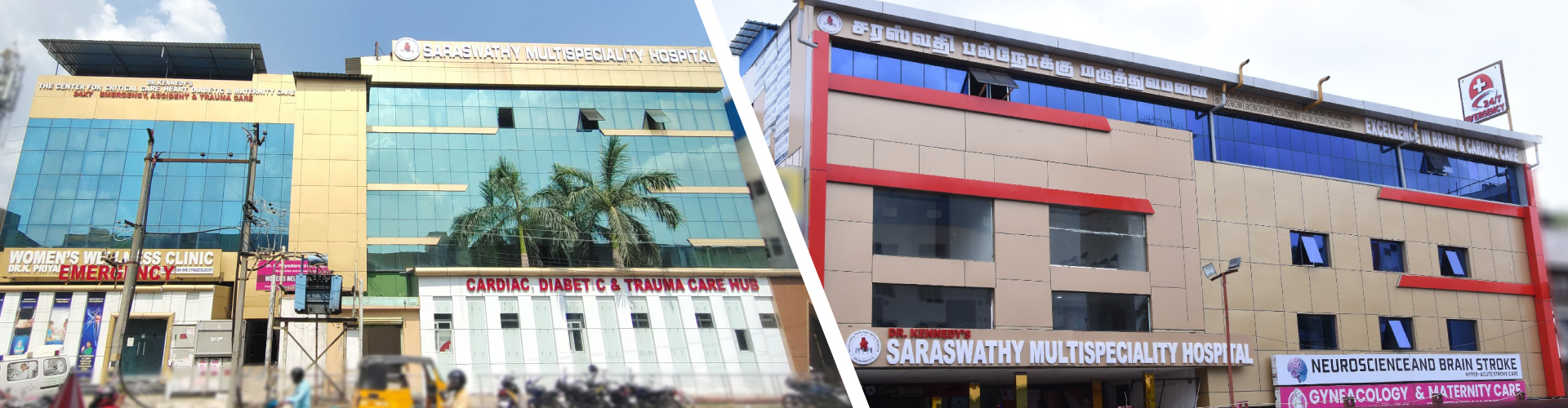
Trusted Healthcare — Dr. Kennedy’s Saraswathy Multispeciality Hospital
Our team supports patients and families at every step, from early evaluation and diagnosis to ongoing treatment and caregiver guidance.
Location: Madipakkam / Medavakkam Main Road / Tambaram
Call: 044-22242525 / 99404 99142
This article is for awareness and does not replace medical advice. Please consult a qualified doctor for diagnosis and treatment.