


World Alzheimer's Day: Know the Signs, Support the Family
Alzheimer's disease is one of the most common brain disorders among older adults in India, and cases are rising as people live longer. It slowly affects memory, thinking and behaviour, and it changes life for the patient and the whole family.
Every year on 21 September, World Alzheimer's Day reminds us to talk openly about this condition, spot it early and support the families who live with it every day.
What is Alzheimer's Disease?
Alzheimer's disease is a progressive brain disorder. Over time, nerve cells in the brain lose their connections and gradually die. Two abnormal protein deposits are linked to this damage: clumps of beta-amyloid and tangles of tau.
It usually begins with mild forgetfulness and, without care, slowly reaches the point where a person struggles with everyday tasks.
Early Warning Signs of Alzheimer's
Watch for these changes in yourself or a loved one:
- Forgetting recently learned information, important dates or events
- Asking the same questions again and again
- Difficulty planning, following a recipe or handling household bills
- Confusion about time, dates or place
- Trouble finding the right words or following a conversation
- Misplacing things and being unable to retrace steps
- Poor judgement, such as unusual decisions with money
- Withdrawing from family, hobbies or social activities
- Mood and personality changes: anxiety, suspicion, irritability or low mood
- Getting lost in familiar surroundings
If you notice several of these signs, please don't wait. Early assessment gives families more time to plan and access care.
Stages of Alzheimer's Disease
| Stage | What families may notice |
|---|---|
| Early (mild) | Forgetfulness, difficulty with planning and finding words, still largely independent |
| Middle (moderate) | Increasing confusion, difficulty recognising people, sleep changes, needs help with daily activities |
| Late (severe) | Limited speech, difficulty walking and swallowing, needs full-time care |
Causes and Risk Factors
The exact cause of Alzheimer's is still being studied, but several factors raise the risk.
Cannot be changed
- Age: Risk rises sharply after 65.
- Family history: A parent or sibling with Alzheimer's increases the risk.
- Genetics: Certain gene variations, such as APOE-e4, are linked to higher risk.
- Down syndrome: Higher chance of developing Alzheimer's earlier in life.
- Mild memory changes: Ongoing mild cognitive problems can precede Alzheimer's in some people.
Can be managed
- High blood pressure and high cholesterol
- Diabetes and obesity
- Smoking and heavy alcohol use
- Lack of physical activity
- Depression and social isolation
- Untreated hearing loss and poor sleep, including sleep apnea
- Head injuries
What is good for your heart is good for your brain. Managing these factors is one of the best steps you can take today.
Complications of Alzheimer's
As the disease progresses, patients may face:
- Poor nutrition: Reduced appetite and difficulty chewing or swallowing
- Infections: Swallowing problems can lead to food entering the lungs, causing pneumonia
- Falls and injuries: Confusion and balance problems raise the risk
- Wandering: Patients may leave home and lose their way
- Growing dependency: Help is needed with bathing, dressing, eating and medicines
- Emotional strain on caregivers: Family members often experience exhaustion and stress
Is It Always Alzheimer's? Treatable Conditions That Mimic It
Not every memory problem is Alzheimer's. Some conditions cause similar symptoms and can be treated, which is why a proper medical evaluation matters:
- Thyroid disorders
- Vitamin B12 and other nutritional deficiencies
- Depression and anxiety
- Side effects of certain medicines
- Infections and dehydration
- Blood sugar and sodium imbalances
- Bleeding around the brain after a fall
- Brain tumours
- Fluid build-up in the brain (normal pressure hydrocephalus)
How is Alzheimer's Diagnosed?
There is no single test. Doctors usually combine:
- Detailed history from the patient and family
- Memory and thinking assessments (cognitive screening tests)
- Blood tests to rule out treatable causes such as thyroid problems or vitamin deficiency
- Brain imaging such as MRI or CT scan
- Neurological and general physical examination
Treatment and Care
There is currently no cure for Alzheimer's, but early diagnosis and the right care make a real difference. Care usually includes:
- Medicines that can help manage memory and thinking symptoms and may slow their progression in some patients
- Treatment of related problems such as depression, sleep disturbance, anxiety and agitation
- Control of blood pressure, diabetes and cholesterol
- Nutrition and physical activity suited to the patient's abilities
- Cognitive activities such as reading, puzzles, music and conversation
- Caregiver guidance and counselling for the family
Tips for Caregivers
- Keep a simple daily routine for meals, medicines, rest and activities.
- Speak slowly and calmly, using short, clear sentences.
- Keep the home safe: good lighting, no clutter, secure doors and stairs.
- Use clocks, calendars and labels to reduce confusion.
- Never argue or correct harshly. Reassure and redirect gently.
- Keep a medicine chart and attend regular follow-ups.
- Look after yourself too. Take breaks and ask other family members for help.
Reduce Your Risk: Simple Habits for a Healthy Brain
- Walk or exercise at least 30 minutes a day
- Eat a balanced diet with vegetables, fruits, nuts and whole grains
- Keep blood pressure, sugar and cholesterol under control
- Avoid smoking and limit alcohol
- Sleep 7 to 8 hours every night
- Stay mentally active by reading, learning and playing memory games
- Stay socially connected with family and friends
- Get your hearing and vision checked regularly
When Should You See a Doctor?
Consult a doctor if you or a family member:
- Forgets recent events regularly
- Gets confused in familiar places
- Shows sudden personality or behaviour changes
- Struggles with daily activities that were once easy
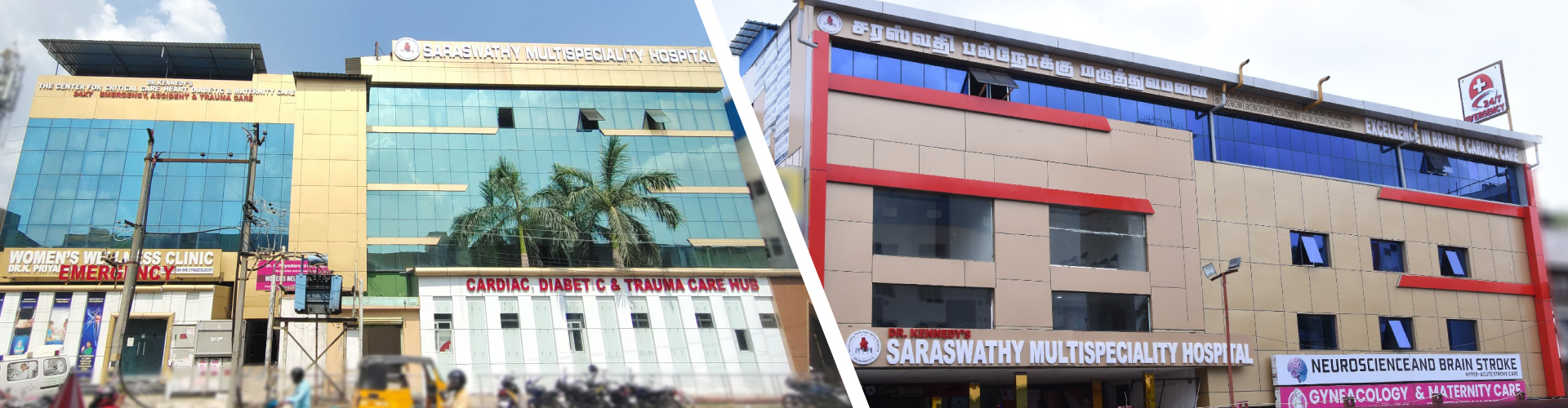
Compassionate Care at Dr. Kennedy's Saraswathy Multispeciality Hospital
Our team supports patients and families at every step, from early evaluation and diagnosis to ongoing treatment and caregiver guidance.
Location: Madipakkam / Medavakkam Main Road / Tambaram
Call: 044-22242525 / 99404 99142
This article is for awareness and does not replace medical advice. Please consult a qualified doctor for diagnosis and treatment.